Surge Insights / Solar & Storageusesurge.com/insights/solar-storage
Solar & Storage

How on-site energy becomes an operational and financial strategy.

Solar and storage are no longer simply equipment decisions. Their value depends on load profiles, utility tariffs, resilience needs, incentives, ownership structures, site constraints, and the wider strategy behind how energy is bought, used, and managed.

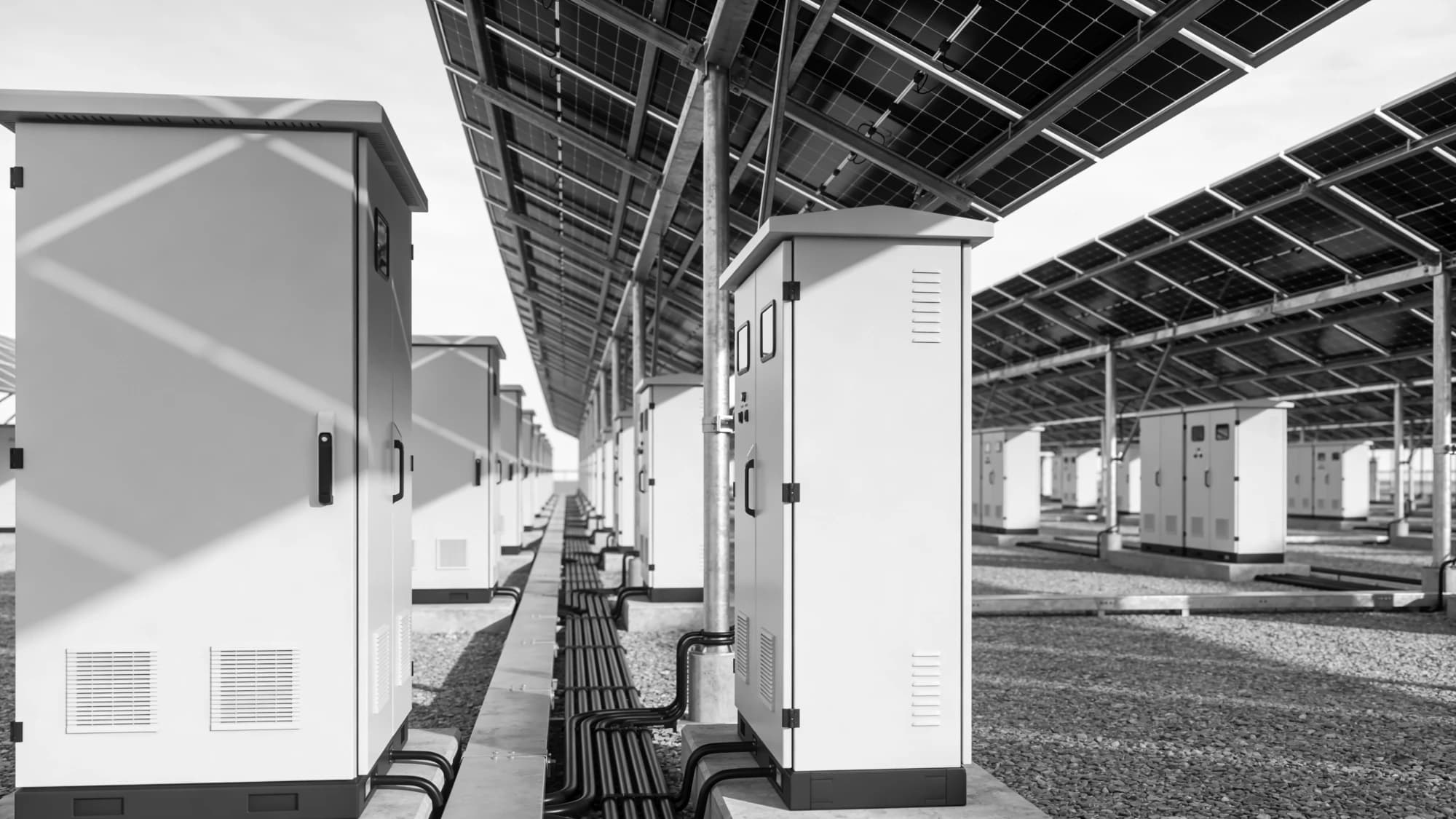
Rows of battery storage and inverter cabinets beneath a solar panel canopy, receding to the horizon, monochrome
Why it matters

Solar and storage economics begin with how a site actually uses power.

The economics of solar and storage are shaped by more than installed cost. Utility rate structures, demand charges, outage exposure, incentives, financing, interconnection, operating schedules, and future load growth can all change what a project is worth.

For commercial and industrial organizations, the question is increasingly not whether solar or storage is “worth it” in the abstract. It is whether a specific energy strategy fits the way a site actually operates.

Load

When and how a facility uses energy.

Tariffs

The utility’s rate structure for billing a site’s electricity use.

Resilience

The value of reducing outage exposure and operating risk.

Capital

The ownership, incentive, and financing path behind the asset.

The Market, By the Numbers
2.35 GWdc

Commercial solar installed in the U.S. in 2025 — a record year for the segment.

SEIA / Wood Mackenzie · Mar. 2026
610+ GWh

Energy storage expected to be added in the U.S. through 2030.

SEIA / Benchmark · May 2026
78,809

U.S. energy-storage jobs supported by the sector.

SEIA · 2026
69.9 GW

Domestic solar-module manufacturing capacity online as of June 2026.

SEIA Supply Chain Dashboard · Jun. 2026
Follow the signals

The variables behind better energy decisions.

Featured Analysis
Solar & Storage

Commercial solar projects are increasingly evaluated through the lens of utility rates, load shape, resilience, storage integration, and long-term operating strategy—not simply installed cost.

Surge Insights · 9 min read
Read the analysis
Latest from the Energy Assets Desk

Recent reporting and analysis.

Solar & Storage Questions, Explained

The decisions behind the proposal.

Commercial solar can reduce the electricity a site purchases from the utility when generation aligns with its load. Its value may come from avoided energy charges, reduced exposure to future utility-price increases, available incentives, depreciation, or other project-specific economics. The outcome depends on the utility tariff, operating schedule, site conditions, ownership structure, and how the facility uses power over time.

Battery storage can make sense when a site has significant demand charges, outage exposure, time-based utility rates, operational constraints, or a need to manage how and when it uses electricity. The economics depend on the tariff, load profile, battery size and duration, dispatch strategy, incentives, financing, and the value the organization places on resilience.

Power describes how quickly a battery can charge or discharge, typically measured in kilowatts or megawatts. Capacity describes how much energy it can store, typically measured in kilowatt-hours or megawatt-hours. Duration is the relationship between the two: a 1 MW battery with 4 MWh of capacity is generally described as a four-hour system. The right balance depends on whether the project is intended to manage short peaks, support resilience, shift energy over longer periods, or serve another operating need.

Demand charges are based on a facility’s highest level of power use during a billing period, rather than total electricity consumption alone. Solar can help reduce utility purchases when it produces during high-load periods, while storage can be dispatched to reduce short-lived peaks. Understanding when a site peaks — and how its utility measures demand — is often central to evaluating the value of solar, storage, or both.

A useful early review typically includes the utility tariff, historical bills, interval load data where available, roof or land capacity, electrical infrastructure, interconnection conditions, outage exposure, incentives, future load changes, and preferred ownership or financing approach. The objective is not simply to identify equipment, but to determine whether a project fits the site’s operational and financial reality.

Projects may be structured through direct ownership, loans, leases, power-purchase agreements, or other third-party ownership arrangements. Each approach allocates upfront capital, operating responsibility, incentives, tax benefits, and long-term project risk differently. The appropriate structure depends on the organization’s objectives, financial profile, risk tolerance, and ability to use available incentives; organizations should review tax and accounting implications with their own advisors.

From Analysis to Execution

Solar and storage work best when they are part of a wider energy strategy.

Surge helps organizations evaluate solar, storage, resilience, utility-rate exposure, capital structures, and project delivery as connected decisions—not isolated equipment purchases.

Energy, Briefly — in your inbox.
The week’s most important signals in clean-energy infrastructure. Occasional, concise, and worth the open.
Related Coverage

Energy assets are shaped by the wider system around them.